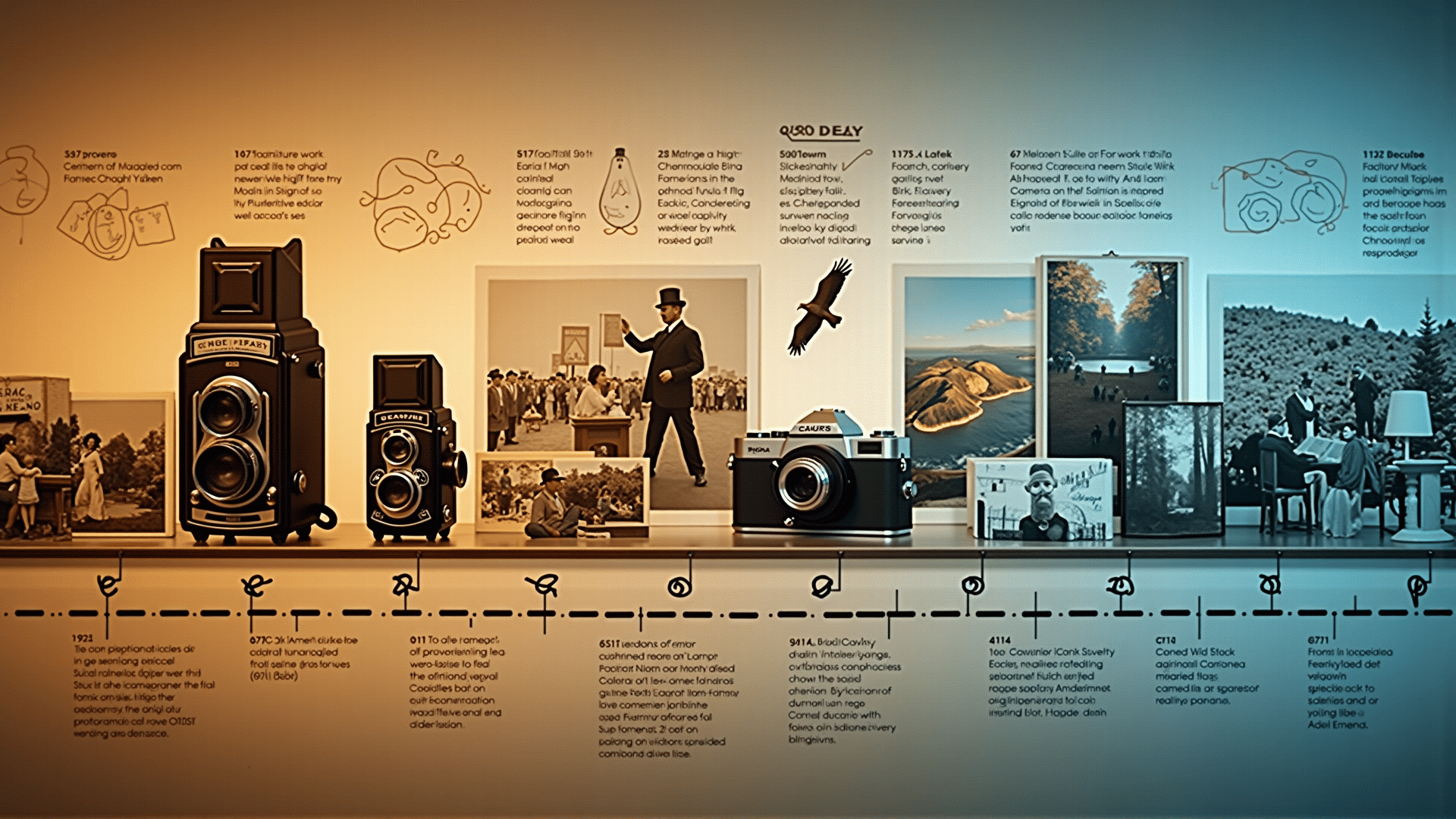
The journey of photography is a fascinating tale of artistic ambition, scientific discovery, and technological advancement. From its transformative inception in the early 19th century to the ubiquitous digital presence in our pockets today, photography has continuously reshaped how we capture and interpret the world around us.
The origins of photography can be traced back to ancient times with the camera obscura, a primitive device used by artists to project an image onto a surface. However, it wasn't until the early 1800s that the first permanent photograph, known as a heliograph, was created by Joseph Nicéphore Niépce in France. This marked the beginning of a new era in visual documentation.
Following Niépce’s breakthrough, Louis Daguerre refined the process, introducing the daguerreotype in 1839. This technique, which produced an image on a silver-coated copper plate, rapidly gained popularity and became the first commercially successful photographic process. Around the same time, Henry Fox Talbot in England developed the calotype, which employed paper coated with silver iodide. These early advancements laid the foundation for future innovations.
The late 19th and early 20th centuries witnessed significant improvements in photographic technology. The introduction of celluloid film by George Eastman revolutionized photography, making it more accessible to the general public. His Kodak camera, famously marketed with the slogan "You press the button, we do the rest," catalyzed a cultural shift, turning photography into an everyday activity.
This period also saw the rise of iconic photographers who used the medium to tell powerful stories. Ansel Adams captured the mesmerizing landscapes of the American West, while Dorothea Lange's poignant images documented the struggles of the Great Depression. Meanwhile, Henri Cartier-Bresson pioneered street photography, capturing candid moments that revealed the intricacies of human life.
In the latter half of the 20th century, color photography became more widespread, transforming commercial and artistic practices alike. The advent of digital photography in the late 20th century marked another pivotal shift. Digital cameras allowed for instantaneous image review and manipulation, eventually leading to the development of smartphone cameras, which democratized photography even further.
Today, photography continues to evolve with advancements in high-resolution imaging, drone technology, and artificial intelligence. These innovations constantly push the boundaries of what is possible in the medium, enabling new forms of creative expression and storytelling.
Through its remarkable history, photography has served as a mirror to society, reflecting cultural, social, and historical moments. It has immortalized the ordinary and the extraordinary, becoming an essential tool for communication and connection. As technology advances, the future of photography remains as promising and innovative as its illustrious past.